Can you tell if someone potentially has a concussion by checking their eyes? Yes. Research has shown that concussion can be identified in 90% of patients from abnormal eye movements.
If you or someone you know has had a recent head injury, checking the eyes can be an important step in spotting a possible concussion.
Abhijot Cheema, Registered Physiotherapist, at Fraser Physiotherapy says “Concussions can affect how your eyes move and focus. That means a simple eye check can provide valuable clues about your brain’s health.”
This guide offers practical tips to help you perform an early eye check after a head injury.
NOTE: this is not a substitute for professional assessment to identify concussion.
Why Check the Eyes After a Head Injury?
Spotting these early helps you or your healthcare providers decide if concussion treatment or monitoring is necessary. Since concussions can affect vision, balance, and coordination, eye checks are a key part of a concussion assessment.
What to Look for When Checking the Eyes
93% of sport and recreational injuries involving the head lead to concussion, which is why knowing this quick 4-step method is essential.
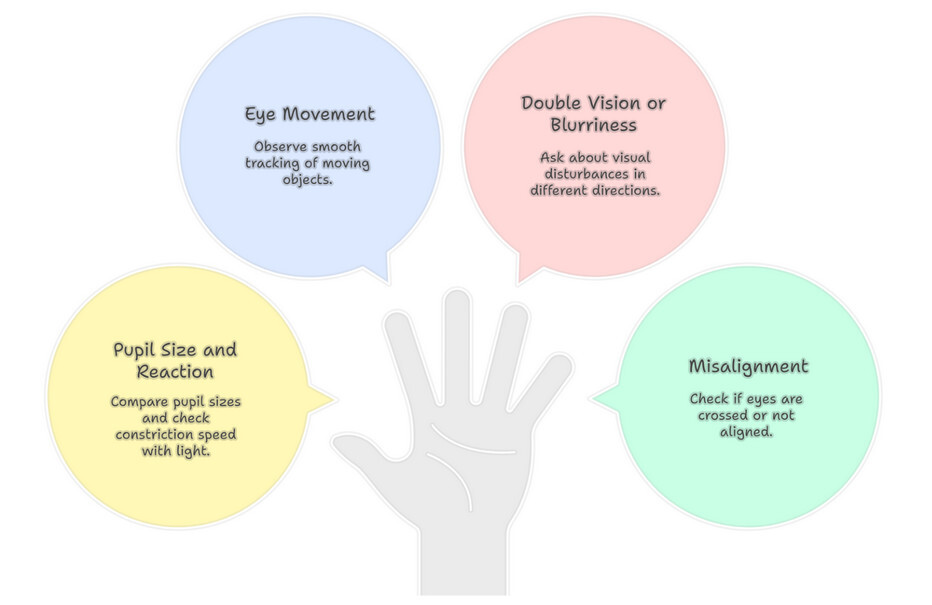
When checking eyes after a suspected concussion, pay attention to:
-
Pupil Size and Reaction
-
Compare both pupils to see if they are the same size.
-
Shine a light gently into each eye to check if the pupils constrict (get smaller) at the same speed.
-
Eye Movement
-
Watch if the eyes can smoothly follow a moving object, like a finger, as it moves left, right, up, and down.
-
Notice any jerking or inability to track the movement steadily.
-
Double Vision or Blurriness
-
Ask if the person sees double or if things look blurry or out of focus when looking in different directions.
-
Misalignment
-
Observe if the eyes appear crossed or not aligned properly when looking straight ahead.
How to Perform a Quick Eye Check at Home
Follow these steps gently and calmly:
-
Check Pupils
-
Sit in a well-lit room.
-
Ask the person to look straight ahead.
-
Shine a flashlight or use room light near their eyes, observing pupil size and reaction.
-
Smooth Pursuit Test
-
Hold your finger about 30 cm from their face.
-
Move your finger slowly left to right, then up and down.
-
Ask them to keep their head still and follow your finger only with their eyes.
-
Focus Test
-
Move your finger towards the tip of their nose slowly until they see double or their eyes can no longer focus clearly.
-
Look for Signs
-
Ask about any new headaches, dizziness, nausea, or visual problems during these tests.
When to Seek Professional Care
Here’s the golden rule: nothing substitutes seeing a qualified medical professional for diagnosing concussion. Eye checks can give important clues, but they are just one piece of the puzzle.
Seek medical or physiotherapy assessment right away if you notice:
-
Unequal pupil size or pupils that don’t react to light.
-
Difficulty moving the eyes or inability to look in all directions.
-
Persistent double vision or blurred vision.
-
Any worsening headache, dizziness, nausea, confusion, or loss of consciousness.
At Fraser Physiotherapy, we offer personalized concussion care that helps you manage symptoms and safely return to your normal activities. Our team can guide you through tailored rehabilitation, including therapies that consider your unique needs.
FAQs About Checking Eyes for Concussions
1. Can I diagnose a concussion by checking the eyes at home?
No. Eye checks help identify signs but cannot confirm a concussion diagnosis. Always seek professional assessment if you suspect a concussion.
2. How soon after a head injury should I check the eyes?
As soon as possible after the injury. Early recognition of signs helps with timely care.
3. Are eye checks reliable for all types of concussion?
Eye assessments are a vital part but not the only test needed. Doctors or physiotherapists use other evaluations to fully understand your condition.
4. What other symptoms should I watch for besides eye changes?
Watch for headaches, dizziness, nausea, confusion, trouble balancing, or sensitivity to light and noise.
5. Can physiotherapy help with vision problems after a concussion?
Yes. Specialized physiotherapy can support recovery from vision and balance issues related to concussion.
6. What if I cannot perform these eye tests at home?
If unsure or if symptoms worsen, contact a healthcare provider for a thorough evaluation.
Checking the eyes after a head injury can provide important information about your brain health. If you or a loved one experiences symptoms, Fraser Physiotherapy is here to support your recovery every step of the way. We offer convenient same-day appointments and a full range of services including physiotherapy, concussion care, massage, and acupuncture to help you heal comfortably and confidently.
Contact us today at 780-600-4950 or info@fraserphysiotherapy.com to schedule an appointment or learn more about our concussion care options.
admin
Contact Me